

Insurance operations are undergoing a fundamental shift as expectations from clients, carriers, and regulators continue to rise. Clients now demand faster responses and seamless service; carriers expect cleaner, more consistent submissions; and regulators require greater accuracy and transparency across every stage of the process. These forces are redefining the role of operations, moving firms beyond routine, process-driven execution toward efficiency-focused models that directly influence growth and client experience.
Today, building more agile and scalable operations has become a need of the hour to maintain competitiveness. This shift is being driven by several factors, including rising client expectations for speed and responsiveness, increased carrier emphasis on submission quality and turnaround times, expanding regulatory oversight, and the need to scale operations without a proportional increase in headcount.
The Current State of Insurance Workflows
Many insurance firms are in a transition phase—operating with a mix of traditional processes and emerging digital tools. While core systems exist, much of the day-to-day work still depends on manual coordination, especially when handling data across multiple touchpoints. Information often flows through emails, spreadsheets, PDFs, and core platforms simultaneously, requiring teams to bridge gaps between systems rather than relying on a unified workflow.
This hybrid environment creates both strengths and gaps. Teams bring deep domain expertise and institutional knowledge, but workflows are not always designed for speed, consistency, or scale. As volumes increase, particularly during renewals or peak periods, these inefficiencies become more pronounced, leading to delays, rework, and increased operational strain.
For example, consider a mid-sized brokerage handling commercial policy renewals. Client data may arrive via email, supporting documents in PDF format, and historical records stored in a CRM. A team member must extract and re-enter this information into a policy system, validate it against prior records, and follow up for missing details. If even one data point is inconsistent, the process loops back, delaying submission and increasing turnaround time. Multiplied across hundreds of accounts, this creates a significant operational bottleneck.
What this looks like in the real world:
- Data is moving through emails, spreadsheets, and core systems simultaneously.
- Teams are manually validating and reconciling information across sources.
- Systems that support operations but don’t fully integrate with each other.
- Increasing effort is required to maintain consistency, accuracy, and version control.
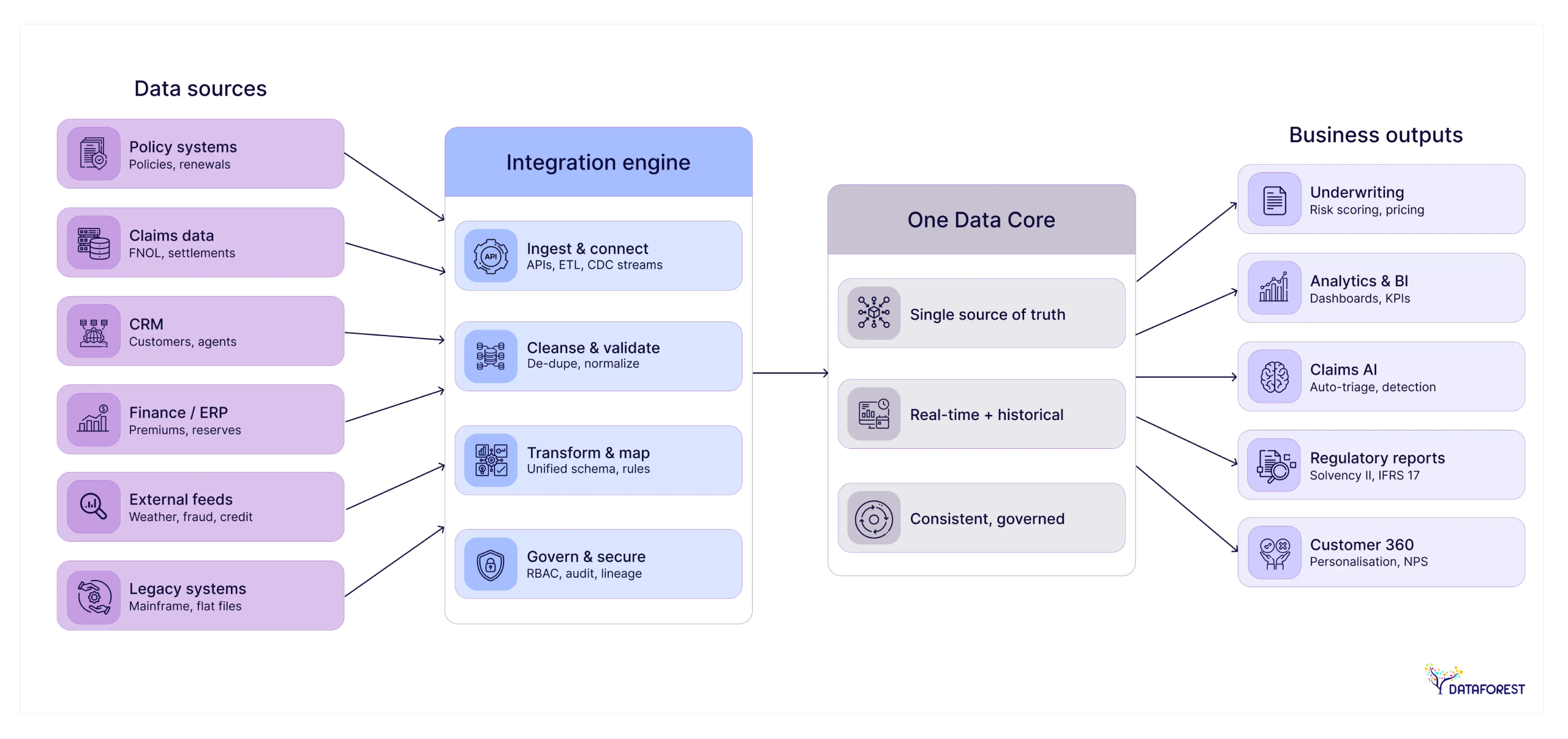
Exhibit 1: From Fragmented Data Sources to Integrated Insurance Operations
What is the Core Operational Challenges Insurance Firms’ Face?
As insurance firms grow, operational inefficiencies don’t remain isolated; they begin to impact turnaround time, cost structures, and client experience. What may seem manageable at a smaller scale becomes increasingly difficult to control as volumes rise and expectations tighten. These challenges are less about individual tasks and more about their cumulative effect on performance.
- Inconsistent Data and Documentation → Delays and Rework
When data arrives in multiple formats or contains missing information, processing cannot proceed smoothly. Teams are forced to pause, validate, and often rework submissions. At scale, this leads to slower turnaround times, repeated follow-ups, and increased dependency on manual intervention—directly affecting service speed and client satisfaction. - High Administrative Workload → Reduced Productivity
As routine tasks take up more time, the team’s overall productivity declines. Skilled professionals spend a significant portion of their day on non-core activities, limiting their ability to focus on client engagement or revenue-generating work. Over time, this imbalance increases operational costs without a corresponding increase in output. - Limited Real-Time Visibility → Poor Decision-Making
Without clear visibility into workflows, firms struggle to manage priorities effectively. Bottlenecks go unnoticed until delays occur, and decisions are often reactive rather than proactive. This lack of control makes it difficult to maintain consistency in service delivery, especially when handling multiple clients or high volumes simultaneously. - Compliance Demands → Increased Risk Exposure
Manual processes make it harder to maintain consistent documentation and audit trails. As regulatory requirements grow more stringent, the risk of errors, omissions, or non-compliance increases. Even minor gaps can lead to penalties, reputational damage, or delays in approvals, making compliance both a cost and a risk factor. - Talent and Capacity Gaps → Scalability Constraints
As workloads increase, firms often rely on existing teams to absorb the pressure. However, without scalable processes, this leads to burnout, inconsistent output, and missed deadlines. Hiring alone cannot solve this issue quickly enough, making it difficult for firms to scale operations without compromising quality.
What Is Driving the Need for Modernization?
The push toward modernizing insurance operations is not driven by a single factor but by a convergence of market, operational, and competitive forces. As expectations rise across stakeholders, firms are being compelled to rethink not just how work gets done, but how efficiently and consistently it can be delivered at scale.
At the core, the need for modernization stems from a widening gap between traditional workflows and current business demands. Processes that once functioned adequately in lower-volume, less time-sensitive environments are now struggling to keep pace with real-time expectations, multi-system data flows, and increasing regulatory scrutiny. This gap becomes more visible as firms grow—what was manageable manually starts creating friction, delays, and cost inefficiencies.
More importantly, modernization is no longer just about improving operations—it is about protecting competitiveness. Firms that fail to adapt to risk slower turnaround times, inconsistent service delivery, and reduced ability to scale, all of which directly impact client retention and carrier relationships.
Key drivers behind this shift include:
- Increasing demand for faster turnaround times:
Clients and carriers now expect quotes, policy updates, and servicing requests to be handled within hours rather than days. Delays are no longer seen as operational constraints but as service failures, putting pressure on firms to accelerate every stage of the workflow. - Greater emphasis on data accuracy and submission quality:
Carriers are prioritizing clean, complete, and well-structured submissions to streamline underwriting and reduce back-and-forth communication. Poor data quality not only slows processing but can also impact placement success and carrier relationships. - Rising compliance requirements and audit expectations:
Regulatory frameworks are becoming more stringent, requiring detailed documentation, traceability, and consistent validation. Firms must ensure that every process is audit-ready, which is difficult to achieve through manual and fragmented workflows. - Competitive pressure from digitally advanced firms:
Larger brokers and insurtech-driven players are leveraging automation, integrated platforms, and AI to deliver faster and more consistent service. This is raising the industry benchmark, forcing traditional firms to modernize or risk losing market share. - The need to scale without proportional cost increases:
Business growth is no longer tied to headcount expansion. Firms are expected to handle higher volumes, especially during renewals or peak cycles, without significantly increasing operational costs. This makes efficiency and process optimization critical to sustainable growth.
What is the Role of Automation and AI in Insurance Operations?
Insurance firms are increasingly adopting automation and AI to improve the structure, speed, and consistency of their operations. These technologies are not replacing human expertise; instead, they reduce reliance on manual effort and enable teams to focus on higher-value activities. As workflows become more data-intensive and time-sensitive, automation and AI are emerging as critical enablers of scalable operations.
At a fundamental level, automation handles repetitive, rule-based tasks, while AI adds intelligence by interpreting data, identifying patterns, and supporting decision-making. They help transform fragmented workflows into more streamlined and predictable processes. This broader shift is explored in AI in Insurance: A Revolution in the Industry, which discusses AI’s role in reshaping insurance operations in detail.
How automation and AI are transforming operations in practice:
- Data capture and structuring:
Information from emails, PDFs, and other unstructured sources is automatically extracted and organized, reducing manual data entry and improving consistency. - Real-time validation and error reduction:
Systems can instantly validate inputs against predefined rules or historical data, minimizing errors and reducing the need for repeated reviews. - Workflow automation and task routing:
Tasks are automatically assigned and progressed through workflows, reducing delays caused by manual handoffs and follow-ups. - Faster processing across operations:
Routine activities move more quickly as bottlenecks are reduced, and processes become less dependent on sequential manual effort. - Built-in compliance and audit readiness:
Standardized checks and automated audit trails ensure that compliance requirements are consistently met with less manual oversight.
This structured approach allows firms to move from reactive, effort-driven operations to more efficient, system-driven workflows that can scale with growing business demands.
How Modern Tools Are Transforming Insurance Workflows
The transformation of insurance workflows is not just a result of adopting automation and AI—it is being driven by a new generation of integrated tools and platforms that connect data, processes, and teams in real time. Instead of operating across disconnected systems, firms are increasingly relying on centralized ecosystems where information flows seamlessly, and workflows are system-driven rather than manually coordinated.
At the center of this shift, there are platforms such as Agency Management Systems (AMS), CRM tools, document management systems, and workflow automation engines. Solutions like AMS360, for instance, illustrate how core operational functions—policy management, client data, document handling, and communication can be brought together within a single environment. A deeper look at this can be found in Why AMS360 Software Is Ideal for Your Insurance Agency, which highlights how integrated systems improve visibility and control across operations.
The “how” of this transformation lies in how these tools work together to eliminate fragmentation and create continuity across workflows. Instead of data being manually transferred between systems, modern platforms enable synchronization, automation, and real-time access.
How modern tools are enabling this shift:
- Centralized data ecosystems (AMS + CRM integration):
Client information, policy details, and communication history are stored in unified platforms, allowing teams to access and update data without switching between systems. - Automated data capture and document management tools:
OCR and AI-enabled systems extract and organize information from emails and documents, reducing manual input and improving data consistency at the source. - Workflow automation engines:
Tasks are automatically triggered, assigned, and tracked based on predefined rules, ensuring smoother progression without constant manual follow-ups. - Real-time dashboards and visibility tools:
Managers and teams can monitor workflow status, identify bottlenecks, and make informed decisions without relying on fragmented updates. - Integration layers and APIs:
Different systems—policy administration, claims, CRM, and compliance tools—are connected through integrations, enabling seamless data flow across functions.
Exhibit Title: Operational Impact of Modern Tools on Insurance Workflows
Key Improvements Observed:

What are the Key Benefits of Modernizing Insurance Operations?
Modernizing insurance operations is not just about improving processes; it directly impacts cost efficiency, service quality, and scalability. Firms that adopt structured, technology-enabled workflows are better positioned to deliver faster, more consistent outcomes while making optimal use of their resources. Over time, these improvements translate into stronger operational control and a more competitive market position.
- Improved operational efficiency:
By reducing manual effort and streamlining workflows, teams can handle higher workloads faster and with greater accuracy. This leads to better utilization of skilled resources and improved overall productivity. - Faster turnaround times:
With fewer process bottlenecks and reduced dependency on manual coordination, tasks move more quickly across the workflow. This improves responsiveness to both clients and carriers, strengthening service reliability. - Lower operational costs:
Automation and optimized processes reduce the need for overtime, rework, and additional staffing. As a result, firms can manage growing workloads without significantly increasing operational expenses. - Enhanced accuracy and reduced errors:
Standardized workflows and automated validation checks improve data consistency and minimize the risk of errors. This is particularly important in environments where even small inaccuracies can lead to delays or compliance issues. - Better client experience:
Faster processing, clearer communication, and fewer delays contribute to a more seamless client experience. This not only improves satisfaction but also supports long-term retention. - Scalability without proportional hiring:
Modernized operations allow firms to handle increased volumes—especially during peak periods—without the immediate need to expand headcount, making growth more sustainable.
In addition, maintaining consistent, accurate data across workflows is critical to sustaining these benefits. As explored in Role of Data Integrity in Insurance Risk Management, strong data practices not only support operational efficiency but also improve risk assessment and decision-making.
Conclusion
Modernizing insurance operations ultimately comes down to removing friction from how work actually gets done. When data flows seamlessly, tasks move without constant follow-ups, and systems communicate effectively, teams spend less time fixing issues and more time delivering value.
The real advantage is not just speed, but control over processes, data quality, and outcomes. Firms that achieve this are better equipped to handle volume spikes, meet tighter timelines, and maintain consistency without overextending their teams. In a landscape where efficiency directly impacts growth and client retention, operational clarity and execution discipline become the true differentiators.
If your operations are struggling with inefficiencies, capacity constraints, or inconsistent workflows, Insurance Support World can help streamline your processes with AI-enabled solutions and
